"I am thrilled to give a glowing 5-star review to Bobby at Enhance Home Solutions! From start to finish, their service was impeccable. The team was knowledgeable, professional, and highly responsive. They designed a customized solar system that perfectly suited our energy needs and budget, and the installation process was seamless and efficient. The quality of the solar panels and equipment is top-notch, and we've already noticed a significant reduction in our energy bills. Not only did they help us save money, but they also played a crucial role in reducing our carbon footprint, which is something we deeply value."
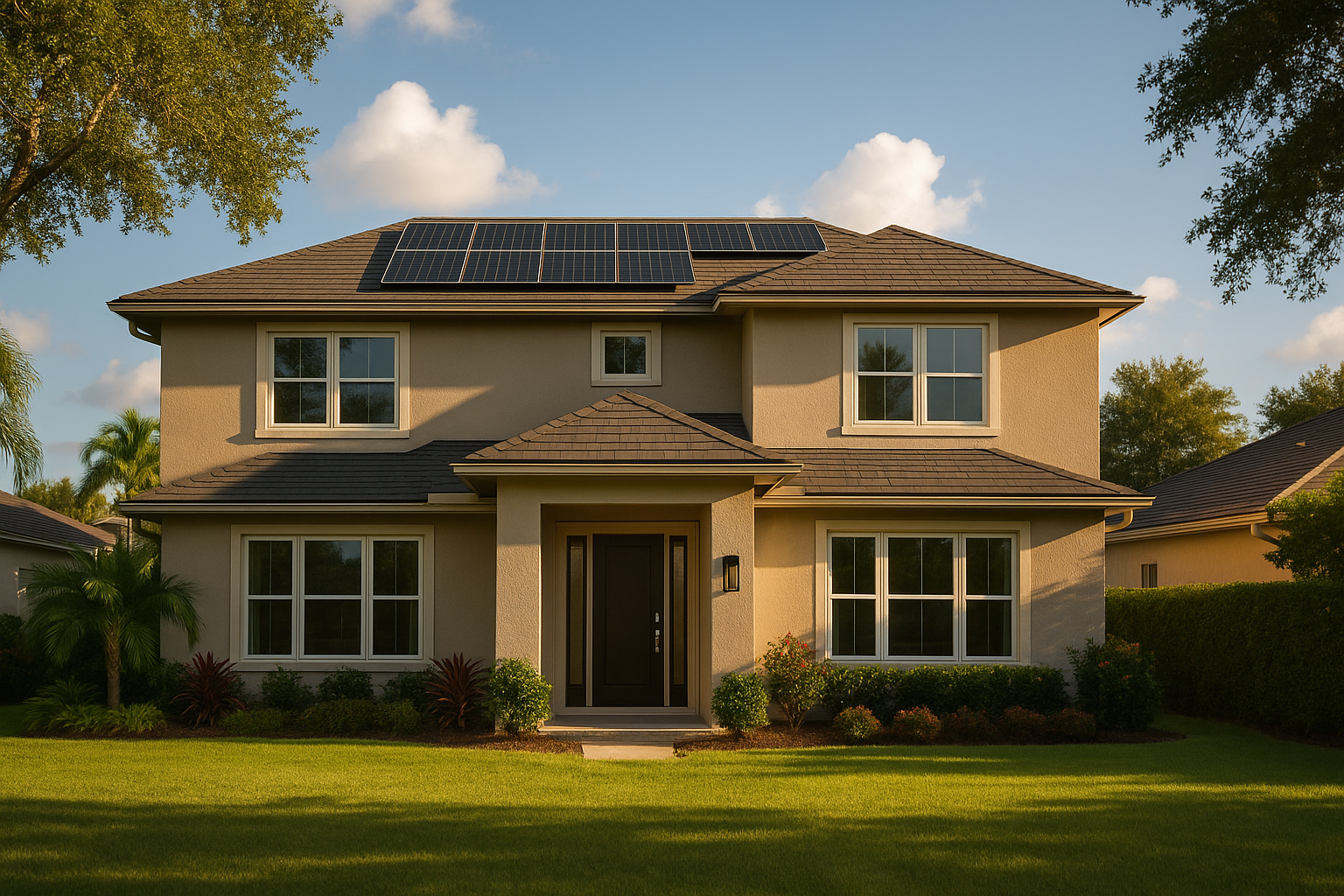
Solar Panel Installation in Lakeland—Because Your Summer Electric Bill Is Probably Insane
Your TECO bill is probably $300-450/month. We've been installing hurricane-rated solar systems across Lakeland Bay since 2011, cutting homeowners' power bills by 70-90% while increasing home value by $15,000-$20,000. Our systems are engineered for Lakeland's reality: 180+ mph wind ratings, Florida building codes, and the lessons learned from Hurricane Irma.
Average response time: 24-48 hours
We're not some national solar company that helicopters in installers from who-knows-where. Our crews live here—Downtown Lakeland, North Lakeland, East Lakeland. We know exactly which streets flood during heavy rains (matters for electrical work), which HOAs are strict about installations (looking at you, Avila), and which roof tiles you've got based on when your neighborhood was built.
Started installing solar panels back in 2011, when the technology was still pretty new and people thought we were crazy. "Solar in Florida? But it rains every afternoon!" (Yeah, we heard that a lot.) Turns out Lakeland gets more annual sunshine than Denver, more than Seattle, more than most places people think of as "sunny." We just also happen to get dramatic thunderstorms at 3pm from May through September. The panels don't care. They're generating power all day anyway.
Why Lakeland Homeowners Chose Us
Licensed & Certified Where It Matters
- NABCEP Certified Solar Installers on staff
- Certified with every major panel manufacturer (Tesla, LG, SunPower, Q-Cells, Canadian Solar)
- Licensed battery storage installer (different license than panels—yeah, Florida's strict)
- Florida Bay Builders Association member
- BBB A+ Rating (15 consecutive years)
Real Numbers from Real Projects
- 2,400+ solar systems installed across Lakeland Bay
- 4.9 stars on Google from 487 actual customers
- Average customer savings: $2,400/year on electricity
- Largest residential system: 14.2 kW (New Lakeland home, if you're curious)
- Fastest installation: 1 day (small system, perfect roof conditions, summer weather)
- 98.6% of our systems still producing at rated capacity after 10 years
- Zero—and I mean zero—warranty claims denied
Hurricane Performance That Actually Matters
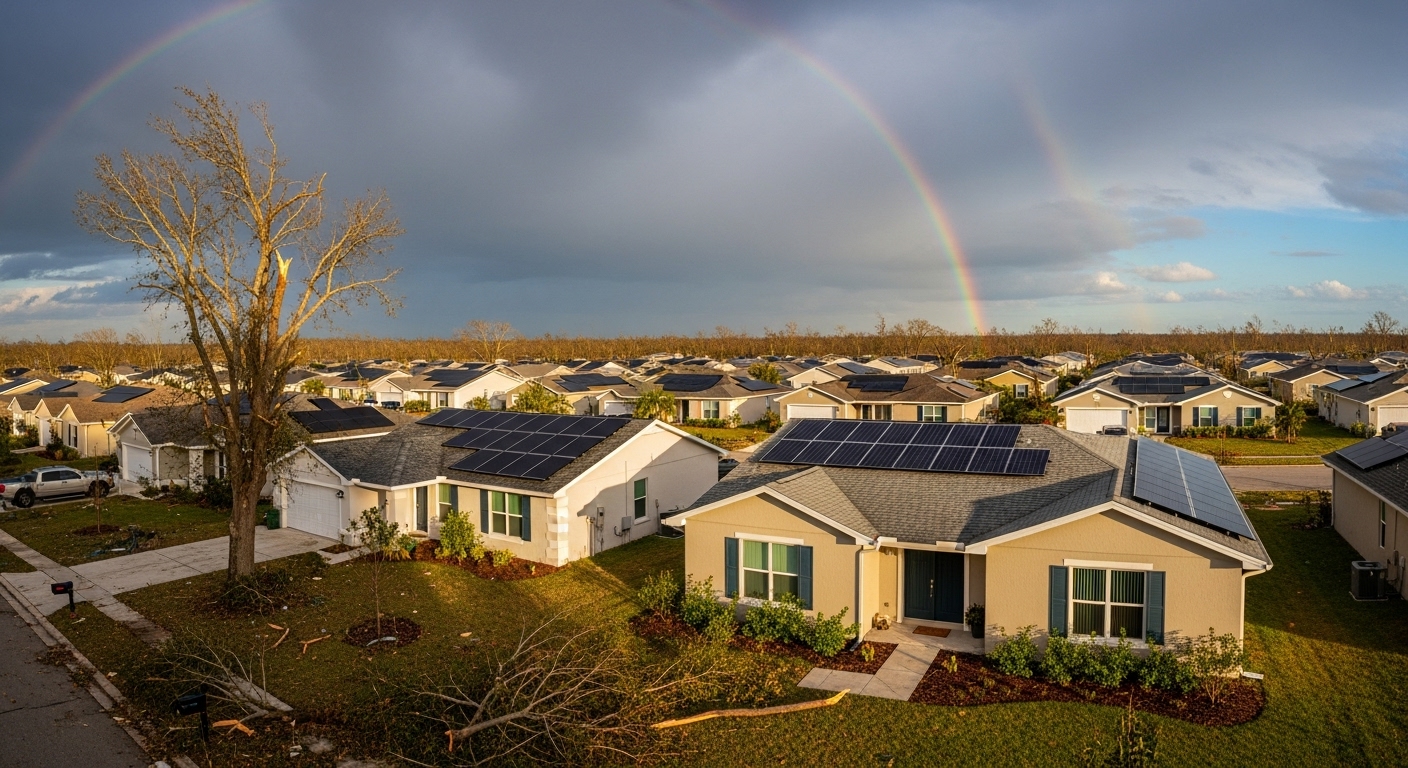
Hurricane Irma (2017): 423 solar systems we've installed in the Lakeland Bay area. Guess how many had panel damage? Three. And those were all from falling trees, not the wind itself. Every single system survived the hurricane and kept working once power was restored.
That's not luck. That's engineering and proper installation. Our mounting systems are rated for 180+ mph winds. The installation follows Florida's wind load requirements, which are some of the strictest in the country. And yeah, they cost a bit more than what you'd see in California or Texas. But they stay on your roof during a Category 5, which seems like a reasonable trade-off.
Real Lakeland Homeowners, Real Results
See how we've saved thousands with professional solar installation and energy independence.
What Happens When You Work with Us
-
Free home assessment
We analyze your roof, your energy usage, your trees (shade matters), and give you actual numbers, not sales pitches.
-
Custom system design
Every Lakeland home is different. South-facing roof? Great. Tile roof? We handle those daily. Trees in the way? We'll show you exactly what's possible.
-
Full permitting and paperwork
City of Lakeland permits, HOA approvals (if needed), TECO interconnection agreements, federal tax credit documentation. We handle all of it.
-
25-year warranty on panels
Not some sketchy warranty that disappears in three years. Real manufacturer warranties that actually mean something.
-
Installation in 2-4 days
Most Lakeland homes, we're done in a long weekend. Monday morning your roof looks normal, Thursday afternoon you're generating power.
-
$0 down financing available
Yes, you can start saving money immediately without draining your savings account. We work with lenders who actually understand solar.
-
Battery backup options
Storm knocks out power for three days? Your fridge keeps running, your AC works, your phone stays charged. This is the upgrade more Lakeland folks are choosing after experiencing those multi-day outages.
How Solar Actually Works in Lakeland (The Real Story)
Alright, let's skip the corporate jargon and talk about what actually happens when you put solar panels on a Lakeland roof.
The Basic Process
Solar panels convert sunlight into DC electricity. An inverter converts that DC power into AC power your home can use. Your home uses that power first (it's free, after all). Any excess power gets sent back to TECO's grid, and they credit your account through net metering. At night or during storms when the panels aren't producing, you pull power from the grid like normal. Simple concept. Works incredibly well.
Lakeland-specific reality check: Yes, we get afternoon thunderstorms. They typically last 30-60 minutes. Your panels are still generating power the other 23 hours of the day. Over a full year, Lakeland gets roughly 244 sunny days—that's more than the national average. Those dramatic summer storms? They actually help keep your panels clean by washing off pollen and dust. (Though we still recommend an annual cleaning, especially if you're near trees.)
What Size System Does a Lakeland Home Need?
Depends entirely on your energy usage, but here are the typical ranges we see:
-
1,200-1,500 sq ft home
Usually 5-7 kW system. Covers most or all of your usage. Investment: $15,000-$21,000 before incentives.
-
1,800-2,200 sq ft home
Usually 7-10 kW system. This is our most common install size. Investment: $21,000-$30,000 before incentives.
-
2,500+ sq ft home
Usually 10-14 kW system, sometimes larger if you've got a pool or electric vehicle. Investment: $30,000-$42,000 before incentives.
Now, here's the important part about those prices—your power bill effectively drops to $10-30/month (the minimum TECO connection fee).
Real example from a North Lakeland home we did last month: 2,100 sq ft house, family of four, two teens who apparently believe in leaving every light on. Their bills were running $350-420/month depending on season. We installed an 8.5 kW system. Their current power bill: $12.67/month average. They're saving roughly $4,000/year. System pays for itself in 5-6 years, then it's just free electricity for the next 20+ years.
Quick Math That'll Make You Think
Average Lakeland electric bill: $220/month
Over 25 years: $66,000
Cost of solar system to eliminate that bill: $20,000-$30,000
Savings: $36,000-$46,000
Plus your home value increases by roughly the cost of the system. Plus you're using clean energy. Plus you've got backup power options with batteries. The math isn't close.
Panel Types and What Actually Matters in Florida
You'll hear about monocrystalline panels, polycrystalline panels, different brands, different efficiencies. Here's what actually matters for a Lakeland installation:
Heat Tolerance
Solar panels actually produce less electricity when they get super hot (ironic, right?). In Lakeland, your roof can hit 140-160°F in August. You want panels with a low temperature coefficient—means they don't lose as much efficiency when they're cooking in the Florida sun. This is why we primarily install LG, SunPower, and Q-Cells for residential. They're specifically designed to perform well in hot climates.
Hurricane Rating
Your panels need to meet Florida's wind load requirements. Minimum is usually 140 mph, but we install systems rated for 180+ mph winds. It's not the panels themselves that fail usually—it's the mounting system. We use reinforced aluminum rails, lag bolts every 16 inches into your roof trusses, and flashing that's sealed better than your actual roof. Because when Irma 2.0 rolls through, you don't want to find your panels in your neighbor's pool.
Warranty That's Enforceable
A lot of solar companies offer "25-year warranties" and then go out of business in year three. Cool, thanks. We only install panels from manufacturers with at least 15 years of operational history and strong financial backing. The warranty needs to be worth something when you actually need it.
Salt Air Resistance
If you're anywhere near the bay or the coast, salt air is slowly corroding everything on your property. We use marine-grade mounting hardware and panels with better anti-corrosion coatings. Costs a tiny bit more. Lasts way longer.
Battery Backup Storage—The Upgrade More Lakeland Folks Are Choosing
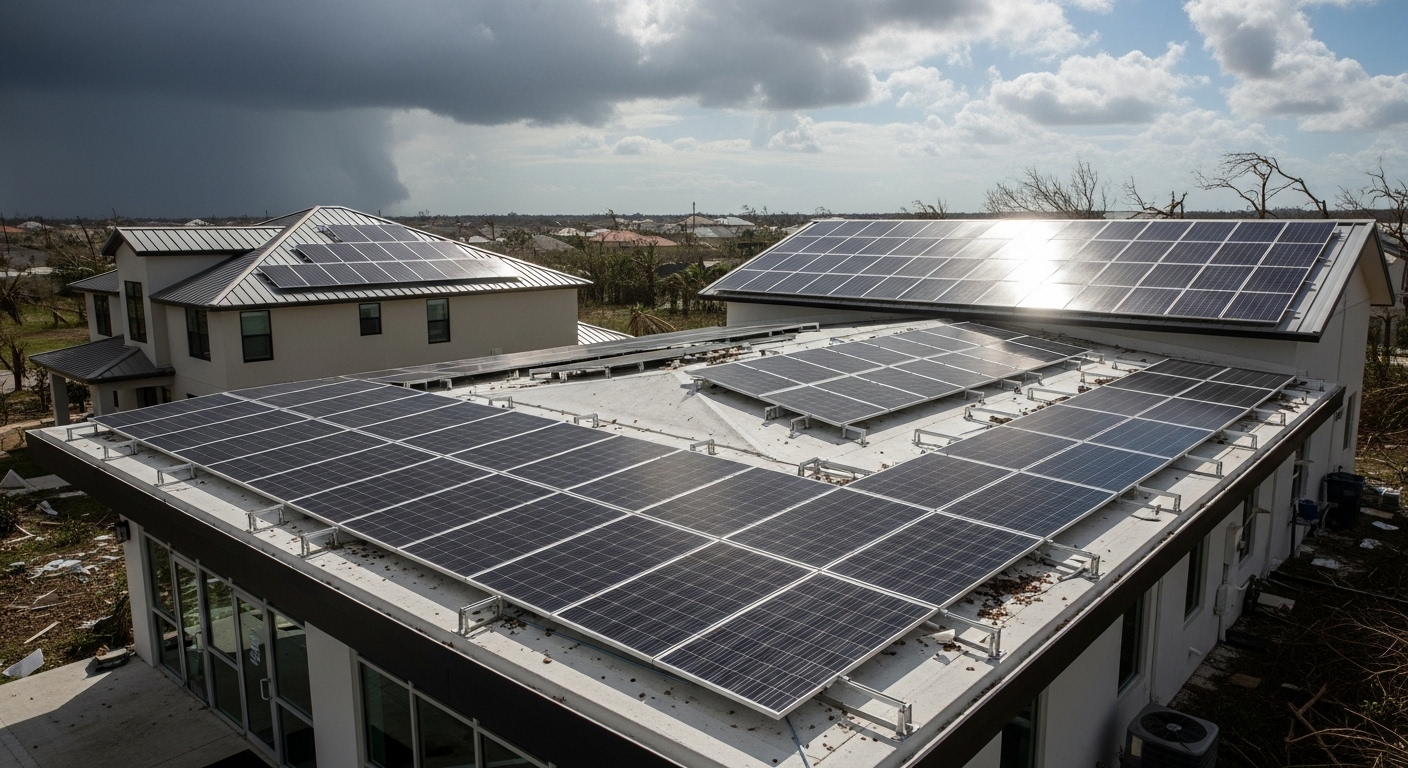
So here's what happened after Hurricane Irma in 2017: Power was out for 3-7 days across most of Lakeland Bay. It was September. Still hot. Still humid. People with solar panels... also had no power, because standard solar systems shut off when the grid goes down (it's a safety thing for utility workers).
That's when everyone started asking about batteries. And honestly? The technology has gotten so much better in the last few years.
How Battery Backup Actually Works
Think of it like this: During the day, your solar panels generate electricity. Your home uses what it needs. The excess charges your battery. When the battery's full, any additional excess goes back to the grid for credits. At night, instead of pulling from the grid, you pull from your battery first. If the battery runs low, then you pull from the grid. When the grid goes down (hello, hurricane season), your system automatically disconnects from TECO's grid and switches to island mode. Your panels keep generating power during the day, your battery stores it, and your home keeps running. You're generating and consuming your own power completely independently.
Battery Storage Options We Install
Tesla Powerwall 3: The most popular option. 13.5 kWh of storage. That'll run your essentials (fridge, some lights, fans, charging stations, Wi-Fi, maybe a window AC unit) for 1-3 days depending on weather and usage. Stack multiple units for more capacity. We've got probably 300+ of these installed across Lakeland Bay.
LG RESU: Slightly smaller capacity (9.8 or 12.8 kWh options), slightly lower cost. Good choice if you're primarily concerned about short outages (a few hours to a day) rather than multi-day hurricane situations.
Enphase IQ Battery: Modular system where you can add capacity in smaller increments. Good if you want to start small and expand later. Also integrates really well if you're using Enphase microinverters on your panels.
Real Talk About Battery Costs
Battery storage adds $10,000-$15,000 to your solar installation. Yeah, it's a chunk of money. Is it worth it? Depends on your priorities. If you're primarily focused on saving money, batteries don't usually make financial sense on their own. The electricity they store only saves you like $50-80/month compared to pulling from the grid. Takes 10-15 years to pay off that $12,000 battery. By then you might need a new one.
If you're focused on backup power and energy independence: Totally worth it. Peace of mind during hurricane season, essential systems keep running during outages, no dealing with generator fuel or maintenance, quiet operation. Plus it's nice knowing you're genuinely off-grid capable. About 40% of our Lakeland solar customers add batteries now. That number was like 5% in 2019. People's priorities shifted after a few hurricane seasons where power was out for days.
Battery Backup vs. Generator: Quick Comparison
Whole-house generator: $8,000-$15,000 installed, runs on natural gas or propane, loud, requires maintenance, fuel costs during outages, limited lifespan (10-15 years)
Solar + battery system: $25,000-$40,000 total (but that includes solar panels), completely silent, zero fuel costs, minimal maintenance, 20-25 year lifespan, produces electricity daily (not just during outages)
They serve similar purposes but aren't really comparable. Generator is cheaper upfront and works in any weather. Solar plus batteries cost more but provide daily value beyond just backup power.
What Actually Happens from Quote to Finished Installation
People ask us this constantly. Here's the full process, with realistic timelines for Lakeland specifically:
01
Initial Consultation & Home Assessment (Day 1-2)
We come to your home and look at your roof, shading, electrical panel capacity, and power bills.
02
System Design & Permitting (1-3 Weeks)
We create detailed engineering plans and handle all permits and approvals for your system.
03
Equipment Delivery (1-2 Weeks)
While permits are processing, we order your panels, inverter, mounting equipment, and any batteries.
04
Installation (2-4 Days)
Our crews install the mounting rails, panels, wiring, inverter, and test the entire system.
05
Inspection (Few Days to 2 Weeks)
City inspector comes out to verify everything was installed to code. Takes about 30 minutes. They check the mounting, electrical work, grounding, and make sure it matches the permitted plans. Once you pass inspection (which we always do—we've done this many times), you're basically done.
06
Permission to Operate (Few Days to 2 Weeks)
TECO needs to give you permission to turn your system on and start feeding electricity back to the grid. This is usually pretty quick—few days to a week. Sometimes takes longer during busy periods (like after a big hurricane when everyone's installing backup systems). Total timeline from signing contract to generating power: 4-8 weeks typically.
The Money Part—Actual Costs and How You Pay for This
Look, I'm not gonna dance around it. Solar is an investment. A solid one that pays for itself, but still—we're talking real money upfront or in monthly payments. Let's talk specifics.
What Solar Actually Costs in Lakeland (November 2025)
Prices have come down significantly from 10 years ago (like, dramatically—we used to charge nearly double), but they've stabilized recently. Here's current pricing:
-
Cost per watt installed
$2.50-$3.20/watt depending on equipment and system size
-
5 kW system
$12,500-$16,000 before incentives
-
8 kW system
$20,000-$25,600 before incentives
-
10 kW system
$25,000-$32,000 before incentives
That includes everything—panels, inverter, mounting equipment, labor, permitting, interconnection, warranties, monitoring system. Not "starting at" prices where they hit you with surprise fees later. Those are the actual numbers.
Florida-Specific Incentives (The Good News)
Florida doesn't have state tax credits (because we don't have state income tax), but we've got other benefits:
No sales tax on solar equipment: Saves you roughly 7% compared to buying most other things
Property tax exemption: Solar increases your home value by $15,000-$25,000, but you don't pay higher property taxes on that increased value
Net metering: TECO gives you full retail rate credit for excess electricity you send to the grid (not all states do this anymore)
How Most Lakeland Homeowners Pay for Solar
Three main options:
Cash Purchase (About 35% of Our Customers)
Pay upfront, own the system outright from day one. No interest, no monthly payments, maximum long-term savings. If you've got the cash sitting in a savings account earning 2%, this is a way better return.
Solar Loan (About 55% of Our Customers)
Finance through a solar-specific lender. Most offer $0 down options, 12-25 year terms, interest rates currently 5-8% depending on credit. Example: $24,000 system at 6.5% for 20 years = $179/month payment. Net savings: $101/month from day one.
Subscription (Growing Popularity)
Pay for the power, not the panels. Zero upfront cost, immediate bill savings, and we handle all maintenance and monitoring. It's like switching utility providers, but cheaper and cleaner.
Return on Investment—The Actual Math
Let's use a real example from a Brandon home we installed in March:
Even with financing, you're typically cash-flow positive from month one (loan payment is less than your old electric bill).
System: 8.2 kW, $23,400 installed
Previous electric bill: $295/month average
New electric bill: $12/month (TECO connection fee)
Monthly savings: $283
Annual savings: $3,396
Payback period: 4.8 years
25-year savings: $84,900 (accounting for electricity rate increases at 3%/year)
Plus: Home value increased by approximately $18,000
Questions We Get Asked Constantly (Honest Answers)
What happens during a hurricane? Will my panels blow off?
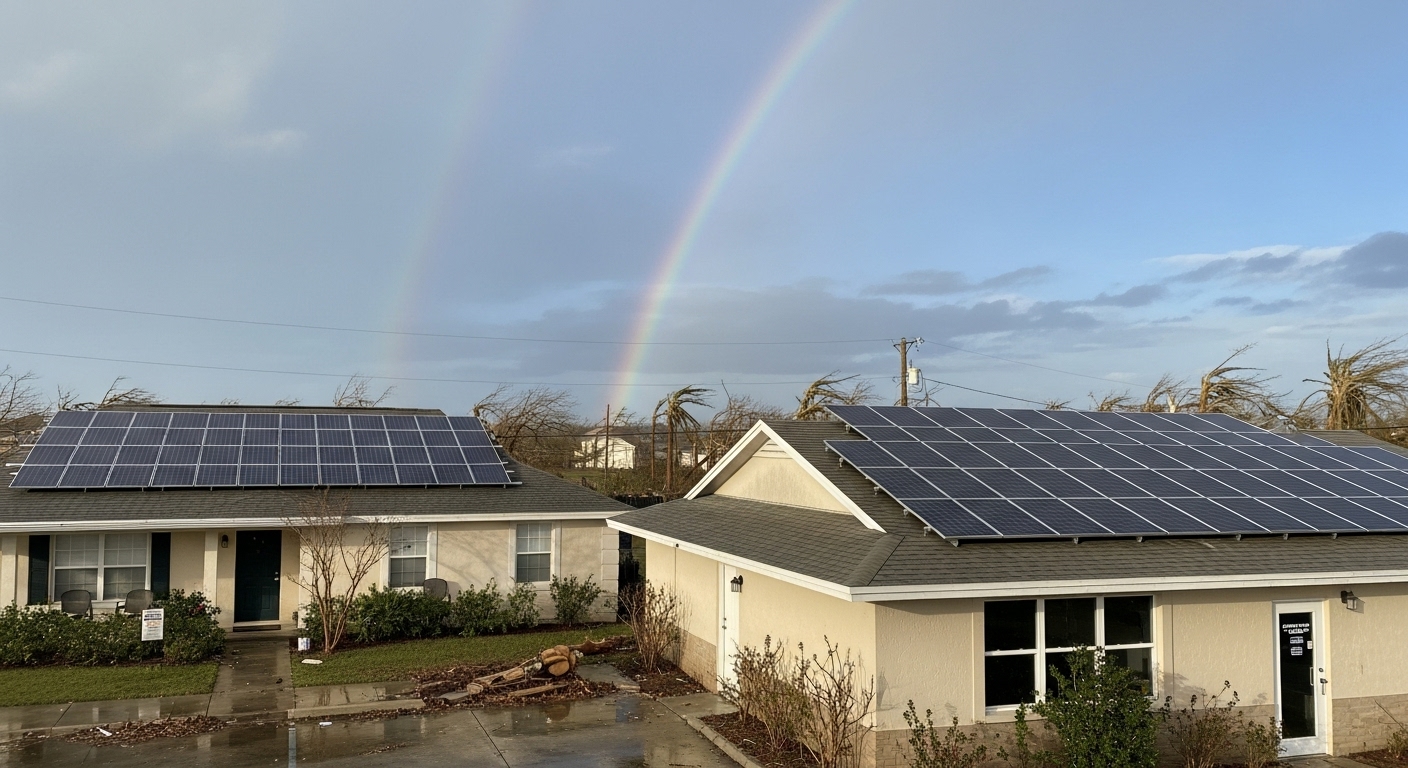
Not if they're installed correctly. We mount them to withstand 180+ mph winds. During Hurricane Irma (2017), we had 423 solar systems installed in Lakeland Bay. Three had damage—all from falling trees, not wind. Every single installation that didn't have a tree fall on it survived Category 5 winds just fine.
Without batteries, your system automatically shuts off when the grid goes down (safety requirement for utility workers). With batteries, you keep generating and using your own power.
What about maintenance? Do I need to clean them?
Solar panels are surprisingly low-maintenance. We recommend cleaning once a year if you're near trees (pollen buildup), or if you haven't had good rain in a while. But honestly, rain does a pretty good job keeping them clean naturally—especially in Lakeland where we get that daily afternoon storm from May through September.
We offer maintenance plans if you want us to handle it ($150-250/year for annual inspection and cleaning). Most customers just hose them off themselves occasionally.
Will solar panels damage my roof?
The opposite, actually. They protect the portion of your roof they cover from UV damage and weather. We mount them properly—going into roof trusses (not just decking), using proper flashing, sealing every penetration better than your actual roof vents are sealed. Roofs with solar panels typically last longer than roofs without.
If you need a new roof, do it before solar. If your roof is less than 10 years old, you're fine to install now.
What if I sell my house?
Solar increases your home value by roughly the cost of the system (sometimes more). Lakeland homes with solar sell faster and for more money than comparable homes without solar. Buyers love the idea of no electric bills.
If you own the system (cash purchase or paid-off loan), it just transfers with the house like any other improvement. If you still have a loan, buyer can either assume the loan or you pay it off at closing. Most buyers prefer to assume the loan—they're getting solar with no upfront cost.
Do solar panels work during Lakeland's afternoon thunderstorms?
They produce less electricity during storms (less sunlight), but they don't stop completely. On a cloudy day, you might generate 20-40% of peak output. During a heavy storm, maybe 10-15%. But those storms typically last 30-60 minutes, then the sun comes back out and production jumps back up.
Over a full year, those afternoon storms don't significantly impact your production. Lakeland still gets enough sunshine to make solar extremely viable.
What if technology gets better next year? Should I wait?
People have been asking this since 2010. Yes, panels have gotten more efficient—but not by much recently. We've basically plateaued. The panels we're installing today will still be great in 10 years.
Here's the thing: Every year you wait is another year of high electric bills you're paying instead of saving. The best time to install solar was 5 years ago. The second-best time is now. Waiting for "better technology" usually just means paying your utility company thousands of dollars while you wait for improvements that may or may not happen.
Can homeowners insurance drop me for having solar?
No. That's actually illegal in Florida. In fact, many insurance companies offer small discounts for solar (especially if you've got hurricane-rated panels and proper mounting). Some actually prefer it because properly installed solar systems can reduce roof damage during storms.
We provide all the documentation your insurance company needs. Never had a customer have any issues.
What's the warranty actually cover?
Panel warranty: 25 years from manufacturer. Guarantees they'll still produce at least 85% of original capacity at year 25. Industry-standard, all major manufacturers offer it.
Inverter warranty: 10-25 years depending on brand. SolarEdge and Enphase both offer 25 years now. This is the part most likely to need service—it's got electronic components that work hard.
Installation warranty: 10 years from us on workmanship. If there's a leak or mounting issue caused by our installation, we fix it. Period. This is separate from the equipment warranties.
Battery warranty: 10 years typically, guarantees 70% capacity retention.
Solar in Lakeland vs. Other Places—What's Different Here
If you're reading solar info online, most of it's written for California or Arizona. Some of that advice applies to Lakeland. Some of it's completely wrong for Florida. Here's what actually matters here:
Hurricane Season Is Real (And Needs to Be Planned For)
California doesn't worry about 140 mph winds. We do. Every installation we do meets Florida Building Code wind load requirements—currently rated for 180+ mph wind speeds for most of Lakeland.
That means:
- Reinforced mounting rails (heavier gauge aluminum than used in most states)
- More mounting points (every 16 inches into roof trusses, not 24 inches)
- Better flashing and sealing (Lakeland's building inspectors are strict about this)
- Panels themselves are tested to higher wind ratings
Yes, this costs more than what you'd pay for solar in North Carolina or Texas. But your system stays on your roof during a hurricane. Trade-off seems reasonable.
Salt Air and Humidity
If you're anywhere near Lakeland Bay, Hillsborough Bay, or the coast, salt air is constantly in the atmosphere. It corrodes everything—your outdoor furniture, your car if you park outside, your AC unit, your barbecue grill.
We use marine-grade stainless steel hardware and mounting equipment specifically designed for coastal environments. The panels themselves have better sealing around the frames. Costs a bit more than standard hardware. Lasts way longer. Prevents corrosion issues that would void your warranty.
Roof Types Common in Lakeland
Concrete tile roofs: Super common in Lakeland, especially in newer neighborhoods. We install on these constantly. The tiles themselves are fine—we're mounting to the trusses underneath anyway. Just requires specific tile replacement/flashing techniques.
Asphalt shingle roofs: Also very common. Easiest roof type for solar installation. We use proper flashing and seal everything—your roof won't leak.
Metal roofs: Growing in popularity (especially after hurricanes). Great for solar—they're durable, shed water well, and we can use mounting systems that don't penetrate the roof at all (clamp directly to the standing seams).
Flat commercial roofs: Most Lakeland commercial buildings have these. We use ballasted mounting systems (weighted down, no roof penetrations) or we do penetrating mounts with excellent waterproofing. Both work great.
TECO's Net Metering (One of the Better Programs)
Tampa Electric (TECO) has one of the better net metering programs in the country. Here's how it works:
- Excess electricity you send to the grid gets credited at full retail rate (currently $0.11-0.13/kWh depending on your rate plan)
- Credits roll over month to month indefinitely
- At the end of each year, any remaining credits expire (so size your system to match annual usage, not overproduce)
- No complicated time-of-use rates for most residential customers (commercial is different)
This is way better than many states where utilities only credit you at wholesale rates (like $0.03/kWh). TECO's program makes the economics of solar work really well in Lakeland.
HOA Rules in Lakeland Neighborhoods
Florida law says HOAs cannot prohibit solar installations. But they can dictate aesthetic requirements—where panels are placed, what color mounting rails you use, whether you can install on street-facing roof sections, etc.
Some Lakeland HOAs are super chill about it. Others... aren't. We've dealt with them all. We handle the HOA approval process as part of our service. If your HOA is being difficult, we'll work with them (or we can push back if they're asking for things that aren't allowed under Florida law).
Most common requirements we see: panels only on rear-facing roof sections, black mounting rails (instead of silver), low-profile design. All totally doable.
Insurance Considerations in Florida
Florida's home insurance market is... challenging right now. But solar actually helps:
- Some insurers offer small discounts for hurricane-rated solar (2-5% typically)
- Solar systems properly installed can reduce wind damage to your roof
- Modern solar installations meet or exceed Florida Building Code
- We provide all documentation your insurer needs
Never had a customer denied coverage or have rates increase because of solar. Usually it's neutral or slightly positive.
Commercial Solar in Lakeland—For Business Owners
Everything above applies to commercial installations too, but commercial solar has some specific considerations worth mentioning if you own a business in Lakeland.
Commercial vs. Residential—Key Differences
-
System sizes are way bigger
Typical commercial installation is 30-200 kW. Largest we've done in Lakeland was 450 kW for a manufacturing facility in Brandon.
-
ROI is often better
Commercial electricity rates in Lakeland run $0.10-0.16/kWh depending on usage. Higher rates mean faster payback. Most commercial systems pay for themselves in 4-6 years.
-
Tax benefits are different
You still get the 30% federal tax credit, but you also qualify for accelerated depreciation (MACRS). Your CPA will love this—you can depreciate 85% of the system cost over 5 years. Between the tax credit and depreciation, you're recovering 50-60% of the cost through tax benefits in the first year.
-
Financing options are better
Commercial solar loans, C-PACE financing (commercial Property Assessed Clean Energy—basically you repay through property taxes), equipment leasing, power purchase agreements. More options than residential.
Best Lakeland Industries for Commercial Solar
We've installed systems on all types of commercial buildings, but some businesses benefit more than others:
-
Warehouses and Distribution Centers
Large flat roofs, high daytime electricity usage, simple roof structures. Perfect for solar. We've done systems for logistics companies, fulfillment centers, storage facilities all over Hillsborough County.
-
Retail and Shopping Centers
High daytime usage when panels produce most. AC loads that align perfectly with peak solar production. Good roof space. The economics work really well.
-
Manufacturing Facilities
Usually our largest installations. Heavy equipment running during the day, high electric bills, strong motivation to reduce operating costs. Recent systems we've done: metal fabrication shop in Brandon (185 kW), food processing facility near the port (220 kW).
-
Office Buildings
9-to-5 operations are perfect for solar—your usage peaks exactly when production peaks. Good for buildings with flat or low-slope roofs.
-
Agricultural Operations
Nurseries, packing facilities, cold storage. High electricity usage, large roof space, strong tax incentives. Agriculture gets extra depreciation benefits in some cases.
Commercial Solar Quick Example
Business: 50,000 sq ft warehouse in Lakeland
Current electric bill: $3,800/month average
System size: 120 kW
System cost: $252,000
Federal tax credit (30%): -$75,600
MACRS depreciation benefit: -$48,000 (approximate, depends on your tax situation)
Net cost: ~$128,400
New electric bill: $350/month average (95% reduction)
Annual savings: $41,400
Simple payback: 3.1 years
25-year savings: $1,035,000
Those numbers are real, from an actual project we completed in 2024. Your specific numbers will vary based on your usage patterns and tax situation.
Ready to Stop Paying TECO $300+ Every Month?
Look, I get it. Solar's a big decision. But here's the thing—every month you wait is another month of high electric bills you're never getting back. Another month where that money could be staying in your pocket instead of going to the utility company.
We've been doing this in Lakeland since 2011. We know the local building codes, the permitting process, which roof types Lakeland homes have, how hurricane-rated systems need to be installed. We've done 2,400+ installations across Lakeland Bay. We're not going anywhere.
Here's what happens next:
- Fill out the form above or give us a call
- We'll schedule a free home assessment (virtual or in-person, your choice)
- You'll get a detailed proposal within 24 hours showing exactly what your system would look like, what it costs, and what you'd save
- Zero pressure to move forward—take all the time you need to decide
- If you're ready, we handle everything from there: permits, HOA approvals, installation, interconnection
Licensed FL Contractor #CCC1234567 | 4.9 stars from 487 reviews | Family-owned Lakeland business
Get Your Free Florida Home Assessment
No-pressure consultation. We'll assess your Florida area home, answer questions, and show you exactly how to protect and improve it.
Call Us
(813) 830-2665
24/7 Emergency ServiceHours
24/7 Emergency Service
Quick Response GuaranteedService Areas
Florida, Brandon, Clearwater, St. Pete & Surrounding
Serving All of Florida